Sunday, December 20, 2015

Invocation for the M.I.C.A.H (Milwaukee Inner-city Congregations Allied for Hope) Annual Meeting at the Tabernacle Community Baptist Church


Eloheynu V’Elohey Avoteinu v’imoteinu…

Our God and God of our Mothers and Fathers:

 Our gathering today brings needed hope into our world:

·      A world where violence is an ever-present threat;

·      Where distance grows between those with the most and those with the least;

·      Where undocumented immigrants are called “illegal” by those whose own grandparents came to these shores for the very same reason – to seek a better life;

·      Where the justice system deals ever so gently with white collar criminals but seems calibrated to incarcerate those without money and clout;

And so, the task before us clear and the resolve within us burns brightly. And we are grateful:

We thank God for the leadership of Reverend Marilyn Miller and her officers as she assumes her new role;

We thank all who are here and so many others whose efforts make better the lives of many in Milwaukee;

We pray that our efforts bear fruit;

·      In the safe surrender program;

·      In the Holy Ground Youth and Young Adult Project;

·      In our efforts to help create jobs and increase economic justice.

Eloheinu v’Elohey Avoteinu uvaneinu….

Our God, and God of our ancestors and God of our children;

May we come to be of one mind and one heart,
and through our holy partnership with You God
and with each other,
may we continue to work to heal Milwaukee.

Ken Y’hi Ratzon – may it be God’s will. 
Ken Y’hi r’tzoneinu – may it be our will.

Amen.

October 29, 2015


Sometimes a Sculpture is Just a Sculpture: The Curious Case of Shorewood’s “Spillover II” by Plensa

Like Supreme Court Justice Potter Stewart, many of us think we know anti-Semitism when we see it. Whether someone’s offhand comment, or a stereotypical cartoon, our radar is finely tuned to identify the anti-Jewish sentiments of others.

 Nevertheless, we occasionally can err. A case in point: Shorewood’s sculpture by noted Spanish sculptor Jaume Plensa, entitled “Spillover II.” Composed of random letters made of polished steel, the sculpture is especially striking at night, when illumination and shadows create what seem to be even more than three dimensions. While not everyone’s cup of artisanal tea (see Mary Louise Schumacher’s review in the Journal-Sentinel), the sculpture represents an honest attempt to place striking art in civic locations.

The sculpture’s peaceful repose in Shorewood was shattered recently when a visiting east coast blogger noticed words that seemed to jump out of the jumble of random letters. They included the phrases “Cheap Jew” and “Fry Bad Jew.” Writing about the offensive language in his blog, he opined that the sculpture was “not art but a piece of scrap.”

 The blog quickly went “viral” and soon Milwaukeeans were debating. Was this an intentional act? Or was the blogger seeing things that weren’t there? The blogger remained firm in his conviction that the words were placed intentionally and with the knowledge of the artist, himself.

I became curious and looked up the artist. Plensa is an artist whose humanitarian credentials are unimpeachable. He regularly tries to bring communities together through his work. He even submitted a design for the Illinois state Holocaust memorial. Not the act of your average anti-Semite. 

I then wondered if perhaps if the offending phrases were the work of Plensa’s employees, since they were the one’s most likely responsible for the sculpture’s fabrication. Such creative additions happen more often than you’d think. Even in software code, spurious material can be found. Witness the Business Insider article entitled “Microsoft Programmers Hid A Bunch Of Profanity In Early Software Code.” Ahem.

Additional information convinced me that we were chasing shadows. First, I learned from experts that the likelihood of finding such words among thousands of random letters is much higher than I initially assumed.

Second, a close examination of the sculpture revealed that the blogger had taken liberties in piecing words together, ignoring letters, jumping lines, creating letters out of two different letters, etc.

Third, I saw a statement issued by Plensa’s representatives in Chicago, who said: “Plensa is deeply saddened that his sculpture has been so egregiously misinterpreted. Plensa’s works and beliefs are the antithesis of anti-Semitism.”

Fourth, and most convincing, was a subsequent blog from the east boast blogger, which utterly undermined his credibility. Entitled, “The Power of the Blog: Six Days from Submit to Pick-up Truck,” it bragged how, within six days, his blog post had led to television and press interviews, forcing the artist and the village of Shorewood to remove the sculpture. It then went on to offer a primer in how to get your blog post noticed, spelling out all the steps he used to sensationalize and spread his story, such as “Content is King,” and “Pick a Catchy Title.” By this point, I felt manipulated.

The good news in this story is that those at the center of the issue swiftly responded in an appropriately sensitive way. That includes the village of Shorewood, The Milwaukee Foundation, The Milwaukee Jewish Community Relations Council, and the artist himself, who had the piece taken down and brought back to his studio.

The future of the sculpture is not yet clear. Personally, I hope it is returned quickly to its former location. I’d even argue that the artist ought not to make a single revision to his work. Why? The reason is simple. The Plensa Sculpture affair shows how the power of social media can transform an innocuous matter into something explosive. In that regard it differs little from the rhetorical firestorm currently dominating American political discourse.

What’s more, there are still real anti-Semites in the world and their metastatic message is on the move. While we haven’t experienced the growing violence faced by Jewish communities in Europe, we still have seen a twofold increase in anti-Semitic incidents here in Wisconsin. We need to remain vigilant and ready to respond. To meet the challenge of real anti-Semitism, we have to act with deliberation and forethought, not with alarm and panic. This means when we encounter a case like the Plensa sculpture we should not assume the worst. A simple background check on the artist would have revealed the unlikelihood of ill will. The burden of proof rightly belongs on the accuser, in this case the out of town blogger. In sum, I’ve come to the conclusion that, in this case, a sculpture a just a sculpture.

TRUMP'S DAUGHTER MAY BE JEWISH BUT HE'S GOT A LOT TO LEARN ABOUT THE JEWISH VALUE OF DERECH ERETZ - COMMON DECENCY

For me, the most amusing moment of the Debate this past week, didn’t happen during the debate but during the commercials. It began as many campaign commercials do, with a anthem like score. The voice over begins: “It’s a new day in America.” Cue sunrise. “Today more people will go to work,” film of tradesmen and women working, return home to their families,” cue slow motion returning soldier hugging his wife and kids, “and sleep more soundly than ever before.” (Cue an f-16 flyby fading into a rainbow coalition of children waving big American flags as they run across a field). “All because one man refuses to settle. (Cue the soaring Bald Eagle) Putting people before politics.” (Cue short clips of Americans of every race, ethnicity, color, etc.) “That man is Frank Underwood.” (Cut to actor “House of Cards” actor Kevin Spacey, seated at the desk in the oval office. He looks up, closes a binder, which as it slams shut, cuts short the music. With unmistakable gravitas, he says). “America. I’m only getting started.” Followed by a picture of Frank looking up to his right, against a waving American flag: “This is Frank Underwood and I approved of this message.”

When it dawned on me that this was not a real commercial I was struck by another thought: Why does a fictional president, albeit it one with more than a few character flaws, as the show “House of Cards” reveals, come off so much more appealing than the current crop of presidential contenders? This isn’t unprecedented. If you watched “West Wing” you know that Martin Sheen as President Bartlett was a paragon of virtue and moral rectitude. And with lines written by Aaron Sorkin, he was devastatingly witty as well.

In the real world, we are living in times when those who aspire to high office most often fail to inspire. Partisan politics aside, as they should be on Shabbat, Donald Trump’s candidacy is part farce and part the face of the frustrated. Trump has successfully tapped into the hurt and the fears of those whose jobs have moved on, who are economically, at best, on a stagnant footing. He is ringing their bell, so to speak. And they are responding. And far more scary than he, is the reaction of millions of his followers, a rage expressed as thunderous applause and the desire to, “take our country back again.”

Lest you ever think that the harsh words of a Donald Trump don’t have an effect, witness the poor 12 year old Sikh boy in Arlington, Texas who last week had the class bully tell the teacher he had a bomb in his backpack. The teacher told the principal, who called the police, who came and snatched the 12 year old and held him in communicado for three days before anyone contacted his parents. Oh, and by the way he has a life threatening heart condition. The boy was expelled, is under house arrest wearing an ankle collar, and waiting to find out if he is going to be charged as a minor or an adult. For what? I can’t tell you.

Trump’s overheated, self centered and self-righteous words are an assault on what we call in Judaism the value of Derech Eretz. The phrase “derech eretz” literally means the “way of the land” or “the way of the world” but, in a Jewish context” it comes to mean “common decency.” “Derech Eretz in a standard of behavior for fulfilling our basic responsibility as human beings, to be a mentsch.

What is derech eretz? To speak kindly, give praise, respect others opinions, respect their time and space, be considerate, watch your mouth, think the best, listen and pay attention, no road rage. Instead of raising your hand or your voice, derech eretz insists you raise your own dignity and the dignity of others. Behave as though the world depends on your humanity and decency. Conduct yourself as if every interaction with others is an opportunity to bring holiness into the world.

The duty of derech eretz is so important that our ancestors imagined it coming into existence twenty-six generations before the giving of the Torah, at the moment when the first human beings were expelled from the Garden of Eden. They said: derech eretz kadma l”torah, which means derech eretz is before the Torah, but, in fact can mean Derech Eretz is more important than the Torah. In a way, they saw derech eretz, a system of highly principled, decent behavior, as a necessary precondition in creating the path that bring us to the Torah. In other words, unless we have derech eretz as a regulator on our behavior from within, until we feel obligated to act decently on our own, we won’t be open to feeling commanded by the mandates of wider moral behavior.

At the root of derech eretz it the Torah’s assertion that every person is created in the divine image, and as such, is deserving of our best behavior. You don't hit your spouse. You stand before your elders. You don't curse. You turn off your cell phone when appropriate. You don’t text when someone is speaking to you. You don’t “bully” a classmate. You say “please” and “thank you” and “excuse me” and “I'm sorry.” You don't litter. You don't cheat and lie and steal. You don’t gossip.

On Israeli buses and trains there is a sign directing you to give your seat to someone older than you. But it says all that in three words: “Mipnei seivah takum” – “Rise Before the Elderly” – and everyone knows those words because they come from the Torah. There is a right and wrong manner of behavior rooted in our tradition and heritage, rooted in our being created in the image of the Divine.

There is nothing more spiritual than this realization and, in a very real sense, there is nothing Judaism tries more to teach. Donald Trump may well be the current poster child for what derech eretz isn’t, but the challenge of derech eretz applies to us, within the Jewish community. Consider what happened last summer over the Iran Nuclear deal. Jews who opposed the deal, such as Senator Chuck Schumer were accused of advocating for Israel to the detriment of the United States. Jewish proponents, including many who work for the Obama administration, have been accused of being “court Jews” selling out their brethren to curry favor with the administration, rather than being acknowledged as supporting the deal as the best solution to a problem that has vexed successive presidents from both parties. Derech Eretz was completely absent. U.S. ambassador to Israel, Dan Shapiro, was subjected to death threats and compared to Jewish concentration camp guards for his championing the deal. Congressman Jerry Nadler was called a kapo: a Jew who collaborated with Nazis in the World War II death camps, who, as one writer said, has “blood on his hands.” Another said he had “facilitated Obama’s holocaust.”

The firestorm of words between the two camps became a fight over who is welcome under the American Jewish tent. It not only threatened to destroy the American Jewish community from the inside; it also played into the hands of those who doubt Jewish loyalty towards the US. Furthermore, the war of words between Jews created the perception that the Iran issue revolves around Israel, obscuring the fundamental fact that Iran’s nuclear ambitions present a problem for everyone.

During those weeks of excruciating conversations and arguments, I recalled the words of Israeli Poet, Yehuda Amichai, who wrote:
From the place where we are right
 Flowers will never grow In the spring.
 The place where we are right
Is hard and trampled Like a yard.
But doubts and loves Dig up the world Like a mole, a plow. 
And a whisper will be heard in the place
Where the ruined House once stood.

Yes, sometimes being right is a pyrrhic victory. So what are we to do? How can we restore a sense of derech eretz to our relationships with each other? Rabbi Shammai, the venerated teacher who taught with Rabbi Hillel, though rarely agreed with him, taught the following: (1:15): V’heh-vay m’kabayl et kol HaAdam b’sever Panim Yafot receive every person with “sever panim yafot,” a pleasant countenance. Sever panim yafot means more than a sheyne punim, a pretty face. "B'sever," from the word savar, meaning "to turn one's body toward the person you are greeting, by way of showing more interest); show them your "panim" - show them your face (don't look around); and makes sure it is "yafot" - present that face beautifully. Or, as Avot of Rabbi Natan teaches, “Always greet every person with a smiling face.

Beyond smiling, listen to others with a listening heart. This is at the core of Judaism as we say the Shema. The Shema teaches that while intelligent people know how to talk; wise people know the importance of listening. A community where people listen is a community where people will open their hearts to one another. That is why, I think, the Shema is followed by the prayer V'ahavta (And you Shall Love). Listening is a prerequisite for love.

A powerful story about the power of striving to behave towards all with derech eretz. Near the city of Danzig there lived a well-to-do Hasidic rabbi. Dressed in a tailored black suit, wearing a top hat and carrying a silver walking cane, the rabbi would take his daily morning stroll. During his morning walk, it was the rabbi’s custom to greet every man, woman and child who he met on his way with a warm smile and a cordial “Good Morning.” Over the years the rabbi became acquainted with many of his fellow townspeople and would always greet them by their proper title and name, even the rather boorish farmer who lived near the outskirts of town. “Good morning, Herr Muller!” the rabbi would hasten to greet the man. “Good morning, Herr Rabbiner,” would come the response with a good natured smile. Then the war began. The rabbi’s strolls stopped abruptly. The fate of the rabbi was like that of much of the rest of Polish Jewry: he lost his family in the death camp of Treblinka and, after great suffering, he was deported to Auschwitz. One day, during a selection at Auschwitz, the rabbi stood in line with hundreds of other Jews awaiting the moment when their fates would be decided … life or death. Dressed in a striped camp uniform, head and beard shaven and eyes feverish from starvation and disease, the rabbi looked like a walking skeleton. “Right! Left, left, left!” the voice in the distance drew nearer. Suddenly, the rabbi had a great urge to see the face of the man with the snow-white gloves, small baton and steely voice who played God and decided who should live and who should die. He lifted his eyes and heard his own voice speaking: “Good morning, Herr Muller!” “Good morning, Herr Rabbiner!” responded a human voice beneath the S.S. cap adorned with skull and bones, “What are you doing here?” A faint smile appeared on the rabbi’s lips. The baton moved to the right – to life. The following day, the rabbi was transferred to a safer camp. In his later years, The rabbi told one and all in his gentle voice, “This is the power of a “good morning” greeting. We must always greet each other, with derech eretz.”

In truth, here is nothing more important than keeping ourselves continually predisposed to being benevolent, to being decent, to being kind, to not doing to someone else anything that would be hateful to ourselves. We should give derech eretz the highest priority in our community values, placing it twenty-six generations before everything, even before the study of Torah, even before calling ourselves a Jewish community. Judaism itself demands that in order to be a Jewish community we must first be a humane community.

Scientists tell us that we are utterly interdependent with all of creation. The science is clear and irrefutable; we’re all really one organism, everything alive and everything inanimate. When scientists get down to studying the world on the level of sub-atomic particles, there are no separate entities. It’s not even that we are all connected. We are each other in the largest sense possible. As the inestimable John Lennon put it, “I am he as you are she and you are me and we are all together.” How do we express derech eretz with one another?

We need to remember that deep inside of us, deep in our hearts and in the marrow of our bones, generations before we were globally conscious, even more generations before we were nationalities, even more generations before we were Jewish, twenty-six generations before the torah, back to our basic selves – we were human, striving to be humane, inextricably linked to everything and everyone around us. We must live and act with derech eretz, with benevolence, kindness and decency. Life is too short to live otherwise. 

Wednesday, June 20, 2012

Korach JCC Video shortened from David Cohen on Vimeo.

This is a video I created for a series at the JCC in Milwaukee called Moment of Torah. As you'll see, I took an unorthodox approach.


Monday, September 12, 2011

Invocation Delivered at Cathedral Square 9/11 Tenth Anniversary Commemoration, Milwaukee


Eternal God, Source of Life and Blessing for all Creation: 
Ten years ago we called to you from out of the depths; 
Today we turn to you for courage, strength and wisdom.

• Shelter in peace those souls lost on September eleventh and give comfort to those whose hearts still ache; the parents, spouses, siblings, children and friends who keep their loved ones’ memories alive as a precious legacy.  

• Honor and protect the public servants who responded on September 11th and the days and weeks and months that followed, and who continue to risk their safety for the common good.  And bring healing to those first, second, and third responders whose service at ground zero continues to take a physical, emotional and spiritual toll. 

• Grant us a heart of wisdom, that we may recognize the divine image in every human being. May that wisdom lead us to act toward one another not with anger or prejudice, but with compassion and care.

• Strengthen the hands of those who defend our country and inspire our governmental leaders to be pursuers of peace. In turn, we offer our prayers for our country and its government, our soldiers and citizens, for all who faithfully serve our nation. 

• May the melodies and words we offer today come to be a prayer for peace, that we might live to see the day when swords will be made into ploughshares and nations will not learn war anymore. And together we say: Amen.


Rabbi David B. Cohen
Congregation Sinai
Fox Point, Wisconsin
September 11, 2011

Saturday, August 20, 2011

Arab Spring Gives Way to Middle Eastern Summer: An Analysis of the Past Week's Developments in Israel

For many, the developments in Egypt and Syria this past year were eventually going to lead to the situation Israel faces at this moment: a destabilizing southern border, an Egyptian government unwilling and/or unable to police it, and the Syrians encouraging Hamas to attack Israel from the Gaza strip.

This week, Israel suffered what may in fact be it's first Al Qaeda styled multi-phased attack, on its border with Egypt just north of Eilat. This border with Egypt has been quiet since the signing of the peace agreement in 1979 and the return to Egypt of the Sinai peninsula. Egypt made sure that criminal activity as well as terrorist activity was kept out of Sinai, with very few exceptions. While the peace with Egypt was deficient in many other respects, e.g. Egyptian professional societies would expel their members if they developed any ties with their Israeli counterparts, at least the border was quiet.

That came to an end this week as multiple teams of terrorists (do we really need to continue to call them 'militants' as the world press does?), investigators believe as many as 20, opened fire with AK-47's, anti-tank missiles, rocket propelled grenades and mortars, as well as improvised explosive devices on civilian cars and and buses traveling on an Israeli highway that parallels the border. One of the buses held a number of soldiers returning to their base and they returned fire until army units arrived. Throughout the day, new attacks occurred as new teams of infiltrators were discovered. One such outbreak of shots rang out as Defense Minister Ehud Barak and the Army Chief of Staff Gantz were giving a press conference, just meters away. In that exchange, one of the police's tactical (SWAT) unit's most decorated officer's was killed. For more details about the initial attacks in which eight Israelis were killed, go here.

Undoubtedly, there will be investigation into how these terrorist attacks occurred. Evidently, The Intelligence services told the army that there were rumors that such an attack was in the offing, and the road was closed at night, but reopened in the day. The area where the attack occurred is slated to receive a more substantial security fence - there's barely anything there right now - and the money has been allocated but work hasn't yet commenced. Given the events of the past days, one can be sure that work will start immediately.

Further complicating matters is that, in addition to the terrorists who were sent from Gaza and entered through Egypt, there have been a series of Graad missiles shot into Israel. These are Russian missiles that are more accurate and with greater range than have been used before. One today hit a home in Beersheva, a considerable distance away. For more information about that missile strike, go here. For information about the other missile salvos that have targeted southern Israel, go here.

In particularly disappointing, but not at all surprising, news, Lebanon, which currently sits on the UN security council, prevented the UN from condemning the terrorist attack that left 8 Israelis dead. In somewhat better news, after 24 hours of intense efforts on both sides, Egypt has reversed plans to withdraw its ambassador from Israel. An announcement earlier today said that their ambassador would be leaving Tel Aviv to protest the death of several Egyptian policemen who died in the exchange of fire between Israeli soldiers and the terrorists who had attacked the two buses and cars, a group of whom had taken refuge in an Egyptian army outpost. Egypt and Israeli will conduct a joint investigation into what happened.

There's no doubt that the approaching date in September of Palestine's self-declaration will increase the pressure on the militants to increase their terrorist activities, even as it leads more moderate elements to engage in non-violent demonstrations. Ironically, the extremists only want to win if it comes through battle - winning through compromise or diplomacy is unsatisfying. I fear they will try anything to derail peaceful efforts to resolve the outstanding issues. Unfortunately, there is very little to indicate that anyone else in their society has the ability to control the agenda.

Stay tuned, and continue, as always, to pray for the peace of Jerusalem.

Shabbat Shalom,

Rabbi David B. Cohen

Thursday, June 9, 2011

Why History Matters: The 1967 Six-Day Wa

If you only read one thing about the Middle East this week, read this. David Harris, Executive Director, AJC and Senior Associate at St. Antony's College, Oxford University, reflects on the actual history of the war and its aftermath, as well as attempts to rewrite that history. [Originally published in Huffington Post - hat tip to Rabbi Paul Kipnis]


Mention the word "history" and it can trigger a roll of the eyes.
Add "Middle East" to the equation and folks might start running for the hills, unwilling to get caught up in the seemingly bottomless pit of details and disputes.
But without an understanding of what happened, it's impossible to grasp where we are -- and where we are has profound relevance for the region and the world.
Forty-four years ago this week, the Six-Day War broke out.
While some wars fade into obscurity, this one remains as relevant today as in 1967. Many of its core issues remain unresolved and in the news.
Politicians, diplomats, and journalists continue to grapple with the consequences of that war, but rarely provide context. Yet without context, some critically important things may not make sense.
First, in June 1967, there was no state of Palestine. It didn't exist and never had. Its creation, proposed by the UN in 1947, was rejected by the Arab world because it also meant the establishment of a Jewish state alongside.
Second, the West Bank and eastern Jerusalem were in Jordanian hands. Violating solemn agreements, Jordan denied Jews access to their holiest places in eastern Jerusalem. To make matters still worse, they destroyed many of those sites.
Meanwhile, the Gaza Strip was under Egyptian control, with harsh military rule imposed on local residents.
And the Golan Heights, which were regularly used to shell Israeli communities far below, belonged to Syria.
Third, the Arab world could have created a Palestinian state in the West Bank, eastern Jerusalem, and the Gaza Strip any day of the week. They didn't. There wasn't even discussion about it. And Arab leaders, who today profess such attachment to eastern Jerusalem, rarely, if ever, visited. It was viewed as an Arab backwater.
Fourth, the 1967 boundary at the time of the war, so much in the news these days, was nothing more than an armistice line dating back to 1949 -- familiarly known as the Green Line. That's after five Arab armies attacked Israel in 1948 with the aim of destroying the embryonic Jewish state. They failed. Armistice lines were drawn, but they weren't formal borders. They couldn't be. The Arab world, even in defeat, refused to recognize Israel's very right to exist.
Fifth, the PLO, which supported the war effort, was established in 1964, three years before the conflict erupted. That's important because it was created with the goal of obliterating Israel. Remember that in 1964 the only "settlements" were Israel itself.
Sixth, in the weeks leading up to the Six-Day War, Egyptian and Syrian leaders repeatedly declared that war was coming and their objective was to wipe Israel off the map. There was no ambiguity. Twenty-two years after the Holocaust, another enemy spoke about the extermination of Jews. The record is well-documented.
The record is equally well-documented that Israel, in the days leading up to the war, passed word to Jordan, via the UN and United States, urging Amman to stay out of any pending conflict. Jordan's King Hussein ignored the Israeli plea and tied his fate to Egypt and Syria. His forces were defeated by Israel, and he lost control of the West Bank and eastern Jerusalem.
Seventh, Egypt's President Gamal Abdel Nasser demanded that UN peacekeeping forces in the area, in place for the previous decade to prevent conflict, be removed. Shamefully, the UN complied. That left no buffer between Arab armies being mobilized and deployed and Israeli forces in a country one-fiftieth the size of Egypt -- and just nine miles wide at its narrowest point.
Eighth, Egypt blocked Israeli shipping lanes in the Red Sea, Israel's only maritime access to trading routes with Asia and Africa. This step was regarded as an act of war by Jerusalem. The United States spoke about joining with other countries to break the blockade, but did not act.
Ninth, France, which had been Israel's principal arms supplier, announced a ban on the sale of weapons on the eve of the June war. That left Israel in potentially grave danger if a war were to drag on and require the resupply of arms. It was not until the next year that the U.S. stepped into the breach and sold vital weapons systems to Israel.
And finally, after winning the war of self-defense, Israel hoped that its newly-acquired territories, seized from Egypt, Jordan, and Syria, would be the basis of a land-for-peace accord. Feelers were sent out. The formal response came on September 1, 1967, when the Arab Summit Conference famously declared in Khartoum "No peace, no recognition, no negotiations" with Israel.
Today, there are those who wish to rewrite history.
They want the world to believe there was once a Palestinian state. There was not.
They want the world to believe there were fixed borders between that state and Israel. There was only an armistice line between Israel and the Jordanian-controlled West Bank and eastern Jerusalem.
They want the world to believe the 1967 war was a bellicose act by Israel. It was an act of self-defense in the face of blood-curdling threats to vanquish the Jewish state, not to mention the maritime blockade of the Straits of Tiran, the abrupt withdrawal of UN peacekeeping forces, and the redeployment of Egyptian and Syrian troops. All wars have consequences; this one was no exception. But the Arab aggressors have failed to take responsibility for the actions they instigated.
They want the world to believe post-1967 Israeli settlement-building is the key to the Arab-Israeli conflict. The Six-Day War is proof positive that the core issue is, and always has been, whether the Arab world accepts the Jewish people's right to a state of their own. If so, all other contentious issues, however difficult, have possible solutions.
And they want the world to believe the Arab world had nothing against Jews per se, only Israel, yet trampled with abandon on sites of sacred meaning to the Jewish people.
In other words, when it comes to the Arab-Israeli conflict, dismissing the past as if it were a minor irritant at best, irrelevant at worst, won't work.
Can history move forward? Absolutely. Israel's peace treaties with Egypt in 1979 and Jordan in 1994 prove the point. At the same time, though, the lessons of the Six-Day War illustrate just how tough and tortuous the path can be.

For more information, visit ajc.org.

Wednesday, February 23, 2011

Are Unions Holy?

posted by colleague, friend, and study partner, Rabbi J. Herber: "Within the workers' organization, which is formed for the purpose of guarding and protecting the work condition, there is an aspect of righteousness and uprightness and tikkun olam... Unorganized labor brings damage and loss of money to workers. For the unorganized worker works under worse conditions — both in regard to wages and in regard to working hours, etc. And this is likely to make working conditions worse in general."
- Rabbi Abraham Isaac Kook, first Chief Rabbi of Israel

Saturday, February 12, 2011

A Quick Thought on the Situation in Egypt and the Oceans of Ink Spilled in a Multitude of Blogs on the Subject...

I hate to rain on anyone's pro-democracy parade, but, as much as stuff like this ruins Al-Qaeda's weekend, we've got a long long way to go to anything resembling a representative democracy in Egypt. Mubarek himself was a highly decorated army officer before he became president - what we're watching isn't a revolution as much as a changing of the guard... the real story begins now, as we wait to see if anything is going to change. Stay tuned.

Friday, October 29, 2010

Monday, October 11, 2010

Cantor Rebecca Robins and Zerek Schwartz Tie the Knot!

 Rebecca and Zerek at the rehearsal dinner, held at the "The Post Office" in Babylon, NY. Zerek's father, buddy, assembled a video presentation featuring pictures from the bride and groom's childhood.


Just a few minutes before the ceremony, the radiant bride prepares.

The Hora was danced, and danced, and danced. It was followed by more dancing. And did I mentioned the dancing? And there was food, notable for both its quality and quantity. But no one gained a pound.... because of all that dancing. 


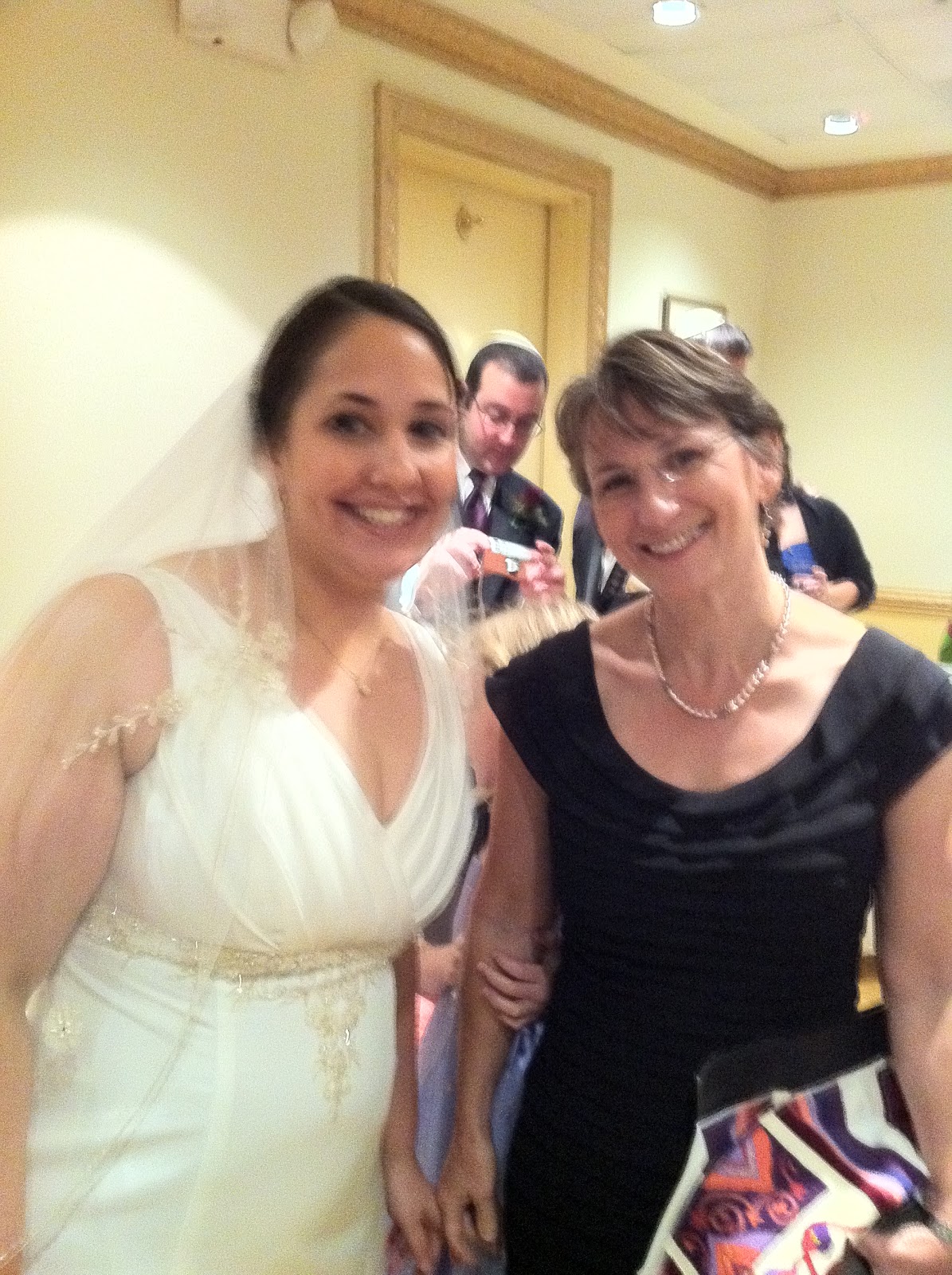
Along with the bride, is Rabbi Amy Schwartzman, who co-officiated the wedding with me. 


Now that is a happy couple!

Wednesday, September 22, 2010

HIgh Holy Day Sermons 5771 - 2010

A number of people have asked for links to the sermons from these past High Holy Days:

Broken Hearts, Broken Tablets and Us

The Perils of Being Perpetually Connected

Guard the Stranger for You Were Strangers in the Land of Egypt

 I hope that 5771 is a year of health and fulfillment for you and yours.


Rabbi David B. Cohen